|
Getting your Trinity Audio player ready...
|
The strongest brand rivalries are rarely just contests between companies. They become contests between identities, beliefs and the stories consumers tell about themselves.
Ask someone which cola they prefer and you may get an answer.
Ask Coca-Cola or Pepsi, and you may get an argument.
Ask which smartphone they use, and they may simply show you the device.
Ask Apple or Samsung, and suddenly the conversation can become personal.
Nike or Adidas.
McDonald’s or Burger King.
Visa or Mastercard.
BMW or Mercedes-Benz.
Netflix or Disney.
Some choices appear rational on the surface. Price, performance, convenience, design and availability certainly matter.
But something more interesting happens when brands become rivals.
Consumers begin choosing sides.
They defend brands they do not own.
Celebrate victories from companies that do not employ them.
Mock competitors they may never have used.
Queue for launches.
Wear logos prominently.
Join communities.
Argue online.
And sometimes remain loyal even when a competing product appears objectively better on a particular measure.
Why?
Because at some point, the choice stopped being only about the product.
It became about identity.
A PURCHASE CAN BECOME A STATEMENT
Every purchase solves a functional problem.
A shoe protects your feet.
A phone connects you.
A car transports you.
A restaurant feeds you.
A streaming platform entertains you.
But products can also perform another function.
They communicate.
The clothes we wear, devices we carry, cars we drive, restaurants we visit and brands we display can become signals about taste, aspiration, values, status, lifestyle or belonging.
Not every purchase carries this weight.
Most do not.
But certain categories become unusually expressive.
That is where rivalry becomes psychologically powerful.
The consumer is no longer simply asking:
Which product works best?
The question quietly becomes:
Which one feels more like me?
Once that happens, competitors are no longer fighting only for transactions.
They are competing for identification.
CHOICE IS RARELY PURELY RATIONAL
Consumers like to believe they make rational decisions.
Sometimes they do.
They compare specifications.
Read reviews.
Check prices.
Evaluate features.
Calculate value.
But human decision-making is rarely a spreadsheet.
Memory matters.
Familiarity matters.
Emotion matters.
Social influence matters.
Previous experience matters.
Design matters.
Trust matters.
Habit matters.
And identity matters.
The rational explanation often arrives after the emotional preference has already formed.
Someone may say they bought a particular car because of engineering.
Perhaps they did.
But engineering may not fully explain why they feel proud when they see it parked outside.
Someone may choose a particular sports brand because of performance.
But performance alone may not explain why they wear the logo when they are not playing sport.
The functional reason explains the purchase.
The emotional reason often explains the attachment.
RIVALRY SIMPLIFIES A COMPLICATED MARKET
Modern consumers face extraordinary choice.
Hundreds of products.
Thousands of messages.
Endless reviews.
Constant promotions.
New launches.
More features.
More options.
Choice should theoretically empower consumers.
Too much choice can also exhaust them.
Rivalries simplify the landscape.
Instead of evaluating every possible option, the consumer can mentally reduce a category to a contest:
This or that.
Apple or Samsung.
Coca-Cola or Pepsi.
Nike or Adidas.
McDonald’s or Burger King.
The simplification is powerful.
Two recognisable opponents are easier to understand than twenty competing alternatives.
Rivalry creates a narrative structure.
There are sides.
Differences.
Histories.
Personalities.
Victories.
Setbacks.
That makes the market easier to process.
It also makes it more interesting.
PEOPLE UNDERSTAND CONTRAST BETTER THAN ISOLATION
Ask someone to describe a brand in isolation, and the answer may be vague.
Place it beside its strongest rival and differences become easier to articulate.
One feels younger.
The other more established.
One more rebellious.
The other more dependable.
One more exclusive.
The other more accessible.
One more minimalist.
The other more expressive.
The comparison gives consumers a frame.
This is one reason rivalry strengthens brand identity.
As we explored in the previous ARENA article, competitors help define one another.
But something else happens on the consumer side.
Contrast helps people decide where they belong.
When the distinction between brands becomes meaningful, choosing one can feel like choosing a position.
BELONGING IS ONE OF THE MOST POWERFUL FORCES IN BRANDING
Humans are social.
We organise ourselves into families, communities, professions, clubs, cultures, interests and tribes.
Brands can become part of these systems of belonging.
A runner may feel connected to other runners wearing the same shoe brand.
A motorcyclist may recognise another rider through a badge.
A gamer may identify with a platform community.
A technology user may feel part of an ecosystem.
A football supporter may wear a sponsor’s brand alongside club colours.
The product creates access.
The community creates attachment.
Rivalries intensify this because belonging becomes clearer when there is another group on the opposite side.
Us becomes easier to understand when there is a them.
That does not necessarily mean hostility.
Often it is playful.
But the psychological mechanism is powerful.
APPLE VS SAMSUNG IS ALSO A CONTEST OF SELF-IMAGE
Consider smartphones.
For most users, competing premium smartphones can perform broadly similar essential tasks.
Calls.
Messages.
Photography.
Video.
Payments.
Navigation.
Entertainment.
Social media.
Work.
Yet conversations around smartphone brands can become remarkably emotional.
Why?
Because the device is unusually intimate.
People carry it almost everywhere.
It contains photographs, conversations, memories, work, entertainment and personal information.
It is touched hundreds of times a day.
It sits on restaurant tables.
Appears in mirrors.
Travels into meetings.
Comes out at social events.
The phone therefore becomes more visible than many products people own.
Brand choice can become part of self-presentation.
One ecosystem may represent simplicity and integration to one consumer.
Another may represent flexibility, experimentation or choice.
The technical differences matter.
But the rivalry gains intensity when those differences become associated with types of people.
At that point, defending the device can begin to feel strangely similar to defending oneself.
COCA-COLA VS PEPSI TURNED TASTE INTO CULTURAL CHOICE
Cola provides an even more fascinating example.
At the most basic level, consumers are choosing a sweet carbonated drink.
Yet Coca-Cola and Pepsi built one of the world’s most recognisable brand rivalries.
Taste mattered.
Distribution mattered.
Price mattered.
Advertising mattered.
But culture amplified everything.
One brand could draw upon heritage, continuity and familiarity.
The other could challenge with youth, energy and generational change.
The beverage became surrounded by meaning.
Consumers were not simply tasting liquids.
They were encountering decades of accumulated associations.
This demonstrates something fundamental about branding:
People do not consume products without context.
They consume the meanings surrounding them.
RIVALRIES GIVE BRANDS PERSONALITIES
People find personalities easier to relate to than corporations.
Rivalries encourage brands to behave almost like characters.
The leader.
The challenger.
The traditionalist.
The rebel.
The innovator.
The establishment.
The specialist.
The disruptor.
These roles make brands easier to understand.
They also invite consumers to identify with them.
Someone who sees themselves as unconventional may naturally gravitate towards a challenger.
Someone who values reliability may prefer the established leader.
Someone who admires craft may choose the specialist.
Someone who celebrates disruption may choose the newcomer.
The company has become a personality proxy.
Consumers are effectively saying:
That brand behaves a little like the person I believe I am, or the person I want to become.
SOMETIMES WE CHOOSE OUR ASPIRATIONAL SELF
Identity is not only about who we are.
It is also about who we want to be.
That distinction matters enormously in marketing.
A person buying running shoes may not yet be a committed runner.
But the purchase can represent an intention.
A luxury product can symbolise future success.
A particular technology brand can represent creativity.
An outdoor brand can represent adventure.
A premium automobile can represent achievement.
The consumer purchases not only utility but possibility.
Brands can become props in the construction of an aspirational identity.
Rivalry makes the choice more dramatic because competing brands may represent different possible selves.
The consumer is choosing not merely between products.
They may be choosing between stories about their future.
NIKE VS ADIDAS SHOWS HOW CULTURE DEEPENS ALLEGIANCE
Sport naturally creates sides.
Teams.
Athletes.
Nations.
Competitions.
Winners.
Losers.
So when brands become deeply embedded in sport, they enter an environment already built around allegiance.
Nike and Adidas extend far beyond functional sportswear.
Their identities intersect with athletes, football, basketball, running, fashion, music, street culture and celebrity.
A shoe can therefore carry several meanings simultaneously.
Performance equipment.
Fashion object.
Cultural symbol.
Collectible.
Status signal.
Community marker.
Personal expression.
That makes the choice emotionally richer.
The consumer may begin with a product preference and gradually develop a brand allegiance.
Or the process can happen in reverse.
They may already admire an athlete, team or cultural figure and then adopt the associated brand.
Either way, the relationship travels beyond footwear.
SOCIAL PROOF MAKES SIDES STRONGER
People look to other people when making decisions.
Reviews influence us.
Recommendations influence us.
Popularity influences us.
Friends influence us.
Experts influence us.
Creators influence us.
Communities influence us.
This does not mean consumers blindly follow others.
But social evidence reduces uncertainty.
If people we respect choose a brand, that choice feels safer.
If people we identify with choose it, the brand may feel more appropriate for us.
Rivalries make social proof highly visible.
Look around your workplace.
Your gym.
Your school.
Your neighbourhood.
Your social feed.
You begin noticing patterns.
Who uses what?
Who wears what?
Who drives what?
Who recommends what?
Brands become socially mapped.
THE INTERNET TURNED BRAND PREFERENCE INTO PUBLIC PERFORMANCE
Before social media, consumers certainly discussed brands.
But most conversations were private or local.
Digital platforms changed the scale.
A preference can now be announced publicly.
Reviewed.
Defended.
Mocked.
Memed.
Shared.
Debated.
A product launch becomes an event.
An advertisement becomes a conversation.
A mistake becomes a spectacle.
A competitive response becomes entertainment.
Consumers are no longer merely audiences watching rivalry.
They participate in it.
They create comparisons.
Reaction videos.
Comments.
Jokes.
Fan communities.
Criticism.
Unofficial campaigns.
The rivalry becomes decentralised.
Brands may start the contest.
Consumers help keep it alive.
ONCE WE CHOOSE, WE LIKE TO BELIEVE WE CHOSE WELL
There is another psychological force at work.
After making a decision, people often prefer information that confirms the wisdom of that decision.
This is understandable.
Nobody enjoys feeling that they made a poor choice.
If you spend significant money on a device, car or premium product, discovering that the competing option may be superior can create discomfort.
One way to reduce that discomfort is to defend your choice.
You notice positive information about your brand.
Question criticism.
Highlight competitor weaknesses.
Celebrate favourable comparisons.
The purchase has already happened.
But psychologically, the decision continues.
This helps explain why some brand debates become surprisingly intense.
The consumer is not only evaluating the company.
They may also be protecting their own past decision.
THE MORE VISIBLE THE PURCHASE, THE STRONGER THE SIGNAL
Not every brand can create tribal allegiance.
Visibility matters.
A brand of industrial lubricant may be commercially important but rarely becomes part of someone’s public identity.
A shoe, phone, handbag, car or watch is different.
Other people can see it.
Visible products function partly as social signals.
This increases the psychological stakes of choice.
When a product is publicly visible, consumers may consider not only:
What do I think of this brand?
but also:
What might this brand say about me?
That question moves us directly from product choice into identity.
McDONALD’S VS BURGER KING SHOWS THAT EVEN EVERYDAY CHOICES CAN BECOME SIDES
Brand allegiance does not require expensive products.
Even fast food can develop rivalry.
McDonald’s and Burger King compete for similar meal occasions and often similar consumers.
The financial risk of choosing one over the other is tiny compared with buying a car or smartphone.
Yet people still develop preferences.
Taste.
Habit.
Childhood memory.
Convenience.
Advertising.
Menu favourites.
Brand personality.
All play roles.
Burger King’s challenger behaviour can make choosing it feel different from choosing the larger market leader.
McDonald’s familiarity can carry its own emotional reassurance.
The burger is part of the decision.
The accumulated experience around the burger is another part.
NOSTALGIA CAN BE STRONGER THAN DIFFERENCE
Some brand loyalties begin before consumers understand what branding is.
A family always bought a particular product.
A restaurant was associated with childhood outings.
A beverage appeared at celebrations.
A car brand belonged to a parent.
A particular shoe marked adolescence.
Years later, those associations remain.
The product carries memory.
This gives established brands an enormous emotional advantage.
A competitor may offer better specifications.
But specifications are competing against childhood.
That is not an easy contest.
Nostalgia turns commercial objects into personal history.
When rivalries involve brands with deep cultural histories, consumers may therefore inherit sides rather than consciously choose them.
HABIT OFTEN LOOKS LIKE LOYALTY
Not every repeated purchase is emotional devotion.
Sometimes it is habit.
The consumer knows the interface.
Knows the menu.
Knows the sizing.
Knows the service.
Knows what to expect.
Switching requires effort.
That familiarity reduces mental work.
Over time, habit can resemble loyalty.
But rivalry can activate the difference.
When a competitor offers a sufficiently compelling reason to reconsider, the habitual customer faces a choice.
Do they remain because the existing brand still matters?
Or do they switch because the alternative now offers greater value?
This is where genuine allegiance reveals itself.
ECOSYSTEMS MAKE CHOOSING SIDES MORE CONSEQUENTIAL
Some brands make individual choices part of larger systems.
A device connects with another device.
A subscription connects with services.
A loyalty programme accumulates benefits.
Accessories work together.
Data transfers seamlessly.
Purchases create familiarity.
The deeper consumers move into an ecosystem, the more costly switching can become.
This cost is not always financial.
It can involve time.
Learning.
Compatibility.
Convenience.
Stored content.
Habits.
Relationships.
The result is that a brand preference becomes structurally reinforced.
The consumer may begin by choosing one product.
Years later, they have effectively chosen a side.
GREAT RIVALRIES GIVE CONSUMERS A STORY TO JOIN
Facts inform.
Stories organise meaning.
A rivalry naturally contains the ingredients of a story.
A protagonist.
An opponent.
A history.
A conflict.
Setbacks.
Comebacks.
Innovation.
Provocation.
Victory.
Failure.
Anticipation.
This narrative structure gives consumers something larger than a product catalogue.
They can follow the battle.
They know the characters.
They remember important moments.
They anticipate the next move.
The category becomes entertainment.
This is one reason iconic rivalries endure.
People are not simply watching companies sell.
They are following an unfolding story.
CHALLENGERS ARE PARTICULARLY GOOD AT INVITING PEOPLE TO CHOOSE
The market leader can sometimes become the default.
The challenger cannot afford to be invisible.
It needs a reason for people to reconsider what they already choose.
This often makes challenger communication sharper.
More provocative.
More distinctive.
More emotional.
More explicit about difference.
The challenger may effectively ask:
Are you really one of them?
That is a powerful question because it turns switching into self-expression.
Choosing the challenger can feel like independence.
Discovery.
Rebellion.
Progress.
Or simply refusing the obvious choice.
This is one reason No. 2 brands can generate passionate communities disproportionate to their size.
BUT BRAND TRIBALISM HAS A DOWNSIDE
Strong allegiance is commercially attractive.
But it can become unhealthy.
Consumers may stop evaluating alternatives fairly.
Brands may exaggerate divisions.
Communities may become hostile.
Criticism may be treated as betrayal.
Preference can become identity so deeply that changing one’s mind feels socially difficult.
For companies, there is a strategic danger too.
If a brand defines its customers too narrowly, it may make potential new customers feel excluded.
The strongest communities create belonging without requiring hostility.
A rivalry can be energetic without becoming toxic.
Playful competition often strengthens both brands.
Contempt can diminish the category.
THE PRODUCT STILL HAS TO DELIVER
Emotional branding is powerful.
It is not magic.
Identity cannot indefinitely compensate for disappointing performance.
Community cannot permanently disguise poor quality.
Nostalgia cannot endlessly excuse irrelevance.
Storytelling cannot rescue a product that repeatedly fails customers.
The strongest brand relationships combine emotional meaning with functional credibility.
Consumers may choose emotionally.
But the experience must justify staying.
This is especially important in rivalries because alternatives remain visible.
A disappointed customer knows exactly where else to go.
The rival is waiting.
SWITCHING SIDES CAN BECOME AN IDENTITY EVENT
There is something interesting about switching between rival brands.
It often feels more significant than switching between two unrelated products.
A longtime user moves from one smartphone ecosystem to another.
A lifelong car buyer changes marque.
A sportswear loyalist adopts the rival.
A cola drinker changes preference.
The practical action may be simple.
Psychologically, it can feel like crossing a boundary.
People announce the switch.
Explain it.
Defend it.
Review it.
Sometimes even joke about betraying their old side.
That language reveals how deeply rivalry can structure consumer identity.
THE BEST BRAND RIVALRIES ALLOW BOTH SIDES TO FEEL RIGHT
This may be the most important point.
A powerful rivalry does not always require one brand to prove that the other is objectively wrong.
Often both sides offer credible value.
They simply represent different priorities.
One may emphasise simplicity.
The other flexibility.
One heritage.
The other reinvention.
One exclusivity.
The other accessibility.
One consistency.
The other experimentation.
Consumers choose according to what matters most to them.
That is what makes the rivalry sustainable.
If there were an obvious answer for everyone, there would eventually be no rivalry.
Great rivalries survive because both sides have a reason to exist.
THE CHOICE BECOMES PART OF THE SELF
At the deepest level, consumers choose sides because brands can help answer questions people continually ask themselves:
Who am I?
What do I value?
Where do I belong?
What kind of person am I becoming?
What do I want others to see?
What feels familiar?
What feels exciting?
What feels like me?
Most purchases never reach this level.
But iconic brands sometimes do.
And when two iconic brands become rivals, the emotional stakes increase.
The consumer is presented with two competing stories.
Two personalities.
Two histories.
Two communities.
Two interpretations of what the category can mean.
The choice becomes richer than utility.
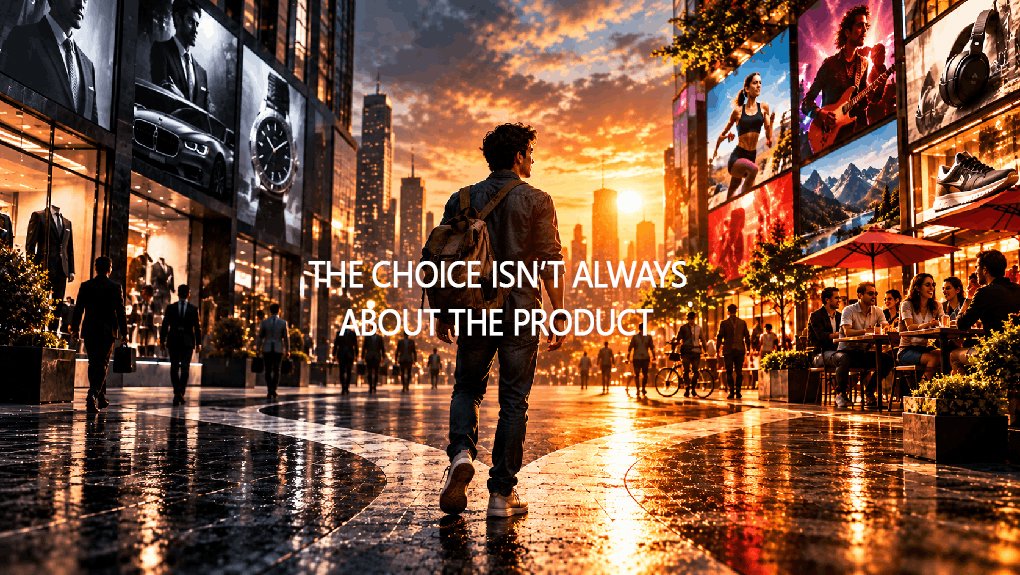
THE CHOICE ISN’T ALWAYS ABOUT THE PRODUCT
Look again at the world’s great brand rivalries.
The products matter.
Of course they do.
Without products capable of delivering value, there is no sustainable rivalry.
But products alone cannot explain the passion surrounding the strongest competitive battles.
Consumers choose sides because brands accumulate meaning.
They become familiar.
Symbolic.
Social.
Aspirational.
Nostalgic.
Expressive.
They connect with memories and communities.
They signal taste.
They reinforce decisions.
They offer stories people can enter.
Eventually, the consumer may stop saying:
“I buy this brand.”
And begin saying:
“I’m a this-brand person.”
That small change in language represents an enormous change in relationship.
A transaction has become identification.
A customer has become a participant.
And a marketplace has become an arena.
FROM THE ARENA TO CLASH OF THE TITANS
Across the 40 iconic brand rivalries explored in Clash of the Titans, the battles are never shaped by companies alone.
Consumers are part of the contest.
They choose.
Compare.
Switch.
Stay.
Argue.
Recommend.
Remember.
And sometimes turn ordinary commercial competition into cultural allegiance.
That is why the greatest rivalries cannot be understood only through market share, advertising budgets or product specifications.
Their real power becomes visible when people begin seeing something of themselves in the brands they choose.
Because in the most powerful brand rivalries, consumers are not merely deciding what to buy.
They are sometimes deciding which story feels like theirs.
— Jitendra Sheth, author of Clash of the Titans